Friday, 30 September 2011

80 Waves - Wave 4

BALEPHUIL, TIREE

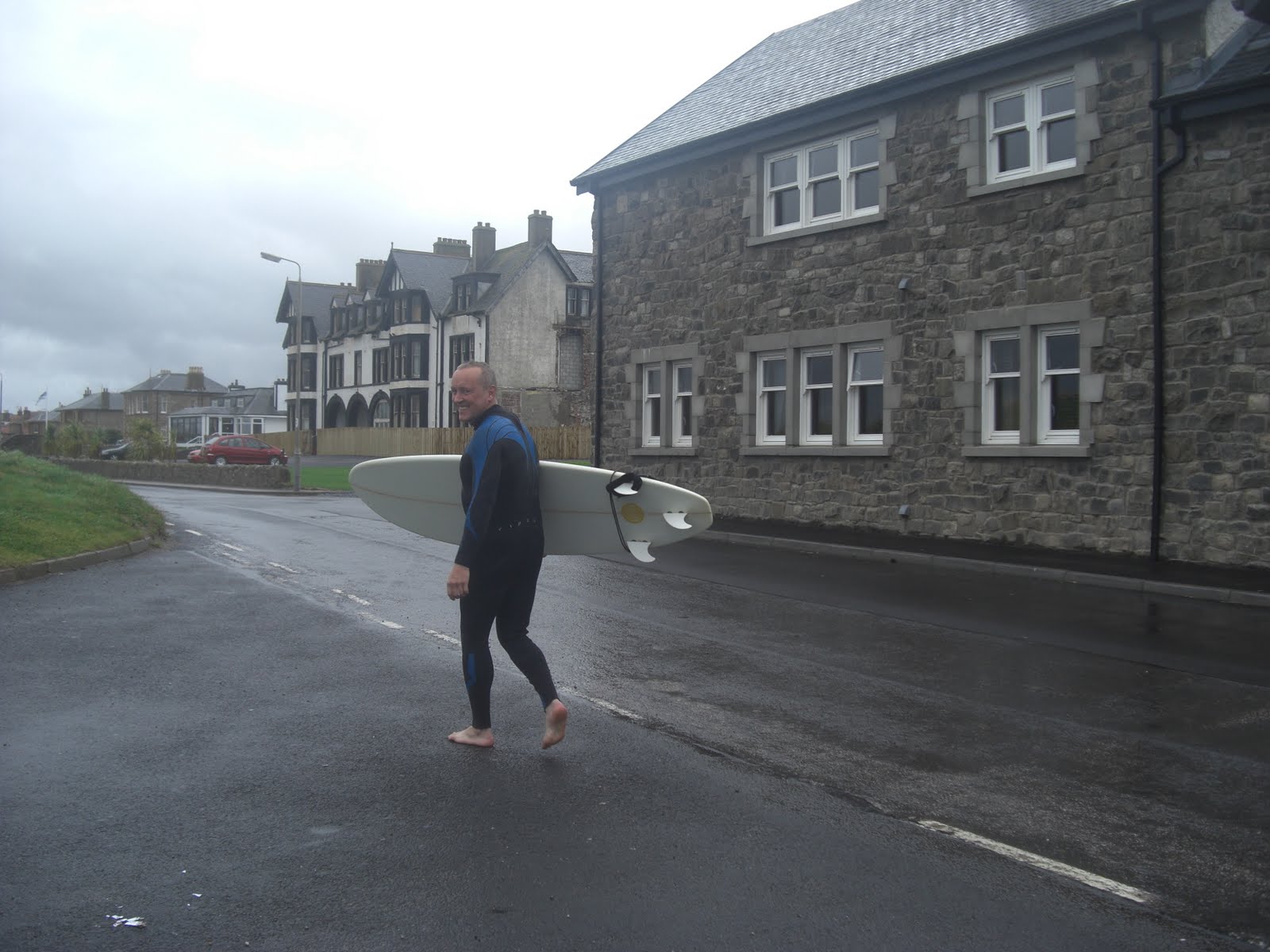
This was the second beach I surfed, and the first I actually stood on for any length of time (so technically the first beach I surfed):

Conditions were small, with just a gentle, waist high wave peeling left and right, and breaking into clear, clean water. A seal was bobbing around for a while, curious to know what was going on. It wasn't epic surf, but fun, and a beautiful place to be surfing alone.

Earlier, I had seen another seal as I had breakfast, on the other side of the island. This was the view from my bed, when I woke:

Finally, waiting for the ferry, I explored this beach, with a lovely clinker rowing boat called Isabella pulled up to the high tide mark, on the sheltered side of the island:

I messed around having lunch and doing van chores until eventually the ferry arrived, and took me off to Barra, damp and salty and excited to be moving on.


Saturday, 6 August 2011

80 Waves - Wave 3

BALEVULLIN, TIREE

This is where it all started, straight off the 5 a.m. ferry from Oban, the very first wave of the trip.

Tiree is a small, flat island about three hours from the mainland, separated from Coll, its neighbour and mirror image, by a narrow, swirling sound less than a mile across. Covered in lush grass, with just a couple of hills and only a handful of trees, it feels both desolate and domestic at the same time.

The beach at Balevullin looks north west, out towards the wild expanse of the Atlantic, catching any waves going. It's a beautiful place, with fine, bone-white sand edged by thick grass, and water as clear and crisp as a mountain spring.

There wasn't much swell about, and the waves were no more than waist high, but very clean and fairly fast, with a light off-shore wind keeping everything smooth and well-groomed. As it was the start of the trip, I was disgracefully unfit, despite all those early-morning sessions at the pool, and I had trouble getting to my feet fast enough. A LOT of trouble! Local surf instructor Suds and his friend Adam were out - and doing a lot better than I was.

The tide was dropping, and with it went most of the swell, unfortunately. As the tide comes in, there are rocks at the southern end of the beach to contend with, and a small rock lurking in the middle of the line-up to avoid. Other than that, it's perfect.


Friday, 22 July 2011

80 Waves - Wave 2

WESTPORT

At the northern end of the same beach as Machrihanish, with a handy carpark and no golf hazard, but without the handy curve that offers a bit of protection from a westerly wind at the southern end.
A surf school had just got out when I arrived, and a bored local sitting on the fence (literally and metaphorically) told me it was "pisch". As far as I could tell, this wasn't a compliment.
Sure enough, a strong on-shore wind was blowing, making the waves messy and weak, but scudding the clouds away to leave a bright, beautiful day.
A rocky patch lurks just below the surface at the northern tip of the beach, like Scylla, while Charybdis currents swirl around it, trying to suck a hapless surfer into its maw.
So not a classic session. But there are worse places to be on a sunny Saturday afternoon.


Sunday, 26 June 2011

80 Waves - Wave 1

MACHRIHANISH

I didn't start my odyssey here, I started on Tiree, but Machrihanish is the most southerly beach I surfed on the Scottish mainland. It sits on the Mull of Kintyre, catching any swell that manages to squeak through the narrow gap between Ireland and the island of Islay.

From the carpark, you have to walk through the village and down across the golf course, right in front of one of the tees.
With several miles of beach stretching ahead of the tee, it must be the biggest bunker in the world. Sure enough, while I warmed up, a golfer was desperately trying to hack his ball back onto dry land. Serves him right for playing golf.

The breaks at Machrihanish and Westport are apparently popular with students at Glasgow University, still a good two to three hour drive away. But on a grey, wet Monday morning, there was just a dozing seal in the water. It didn't realise I was there until I was almost upon it, then it gave a startled snort and slipped beneath the surface, popping up a couple of times to see who had disturbed its nap.

The curve at the southern end of the bay meant that the south-easterly wind was slightly off-shore, cleaning up the swell to create nice, long, shoulder-high left hand waves, with the occasional shorter right when the strong current got the better of me. It's mostly a sandy bottom, with intermittent patches of largish boulders. Unfortunately my official photographer wasn't prepared to stray too far from the comfort of the van, so although I caught some decent waves, they weren't recorded for posterity.

But I bet the seal was impressed.

Sunday, 5 June 2011

Agent Ahoy!

I'm delighted to announce that literary agent Andrew Lownie has agreed to represent me. Since completing my tour of Britain, I have been hard at work on the book version of Around the Coast in 80 Waves, and I'm looking forward to working with Andrew to find a publisher for it.

For my film/ TV work, I am still with Matt Connell at Berlin Associates.

In the next few weeks, I hope to be blogging about surfing in Brighton and Portugal, and will then be blogging a beach-by-beach surf guide to Britain.

So please stay tuned!

Monday, 29 November 2010

I despise Donald Trump

A couple of weeks ago, BBC2 screened Donald Trump's Golf War, an excellent documentary about Donald Trump's multi-million pound campaign to buy up an area of sand dunes just north of Aberdeen to build a golf course.

Despite honourable attempts by locals to prevent this pointless and aggressive development, and with the strong suggestion that bribery and corruption have played a part in the process, the development is now going ahead. But not content with turning an area of untouched dunes into a golf complex, complete with hotel and extensive housing development, Trump is now trying to force the compulsory purchase of the homes of four remaining families who live on land he covets.

And he has already started bulldozing the dunes.

It is a depressing documentary, invoking the spirit of Local Hero but a far from happy ending. If it's on again, it's well worth watching, though very depressing. Corporate arrogance defeats environmental and social concerns. Yet again.

The campaign group Tripping Up Trump have spent the last few years campaigning against the development, and are continuing to support the families under threat of compulsory purchase. Their website is at http://www.trippinguptrump.com/. I strongly urge you to visit the website (or the building site!) and lend your support.

I visited the dunes a year ago. The sea was too flat to surf, but the dunes and the beach were lovely. Not for much longer, though.

Friday, 26 November 2010

Guardian Travel Writing Competition

I was rather more disappointed than I probably should have been to discover that I was one of the runners up in The Guardian's recent travel writing competition. I sent in three pieces, one of which was about surfing at Cape Wrath, one about Orkney (carefully avoiding any mention of surfing) and one about idling around a beach in Goa (ditto). It was the Goa one that made the runners-up list - though inevitably it was the one I wrote last, in least time, and almost didn't bother submitting. Some kind of lesson there, perhaps.

A heavily-edited version of my piece is on the Guardian website HERE.

It's the piece at the bottom, with the heading (not mine): Goa before it's packed away.

My original version, twice as long, follows below. Maybe I'll post the other two pieces I wrote at some point.

THE DISAPPEARING RESORT

Go to most resorts out of season, and you find empty restaurants, silent hotels and an air of bored anticipation. Go to certain villages in Goa, and all you find are palm trees. By law, everything else has to be dismantled and packed away before the monsoon.

Luckily we arrived two weeks before the season ended. There were plenty of beach cafés, but they were disappearing at the rate of at least one a day. Each morning we were confronted by a fresh gap in the row of shacks, as the beachfront began to resemble a child’s smile.

Pulling down a resort every year is an effective way of preventing runaway development, though this doesn’t stop the nearby resort of Palolem from throwing up a thriving town every autumn, with dozens of shops and discos, yoga centres and massage huts attracting the gap year crowd. Patnam is quieter, more restrained, with no more than a dozen beachside cafés, each serving a similar mix of East and supposedly West: chai and something resembling cappuccino; curry and something similar to pizza.

Behind each café, a few steps from the beach, sit a handful of simple but clean wooden huts to rent among the palms, with plumbed-in bathrooms and bamboo walls. They’re basic but clean, and for around 600 rupees a night for a double, a bargain.

At low tide you can wander round the rocks at the end of the beach to see how the other half live. A Bollywood comedy was shooting at the Intercontinental, so the beach there was full of actors, film crew and European crusties drafted in for background colour. When filming stopped, teenage security guards were left in charge, armed with sticks and disarming smiles, eager to chat to while away the boredom.

As the days passed, the number of tourists dwindled. The waiters weren’t too bothered – every afternoon they played raucous cricket on the beach; every evening, they kept one eye on the Indian Premier League. If there weren’t enough customers, they would close for the evening. At my favourite café, they once did this after they had taken our order and let us sit expectantly for 20 minutes. After that, we always checked that the chef would be sticking around long enough to cook our dinner. But it was well worth the gamble – his succulent, spicy fish, cooked in a banana leaf, was by far the best on the beach, and his shack exerted a magnetic pull whenever we tried to go elsewhere. When we did, we were invariably disappointed, and always swore never to abandon him again – hoping he wouldn’t abandon us either.

At sunset, we walked along the beach, keeping pace with a lone dolphin that swam lazily across the bay, until the sun had turned from gold to blood, and dipped behind the sharply silhouetted palms like a clichéd photo of the paradise it was. If they hadn’t packed up the resort around us, we might have stayed forever